Merry Christmas
from everyone in Greenman. Our offices will be closed from Wednesday, 24th December. And will reopen on
Friday, 2nd January.
Merry Christmas
from everyone in Greenman. Our offices will be closed from Wednesday, 24th December. And will reopen on
Friday, 2nd January.

Real Assets: Building a Stronger Portfolio Foundation for 2026 and Beyond
Last Updated on April 21, 2026 by Julia Marks
European investors are increasingly redirecting capital towards essential real estate and infrastructure as part of a broader re-shaping of portfolios. Equity markets remain sensitive to monetary policy shifts, and global portfolios carry currency risk – particularly for investors holding US-dollar assets. Against this backdrop, tangible assets embedded in the European economy are attracting renewed interest as a way to diversify income sources and reduce sensitivity to short-term market sentiment.
This article explains what real assets are, why they are relevant for today’s investment environment, and how retail investors can access them through regulated fund structures.
Historically, access to real assets was limited to institutional investors. Today, evolving regulation – in particular the updated European Long-Term Investment Fund (ELTIF) regime – means individual investors have more practical ways to participate. As with any investment, real assets carry risk, and this article aims to set out both the potential benefits and the important considerations for investors.
What are Real Assets?
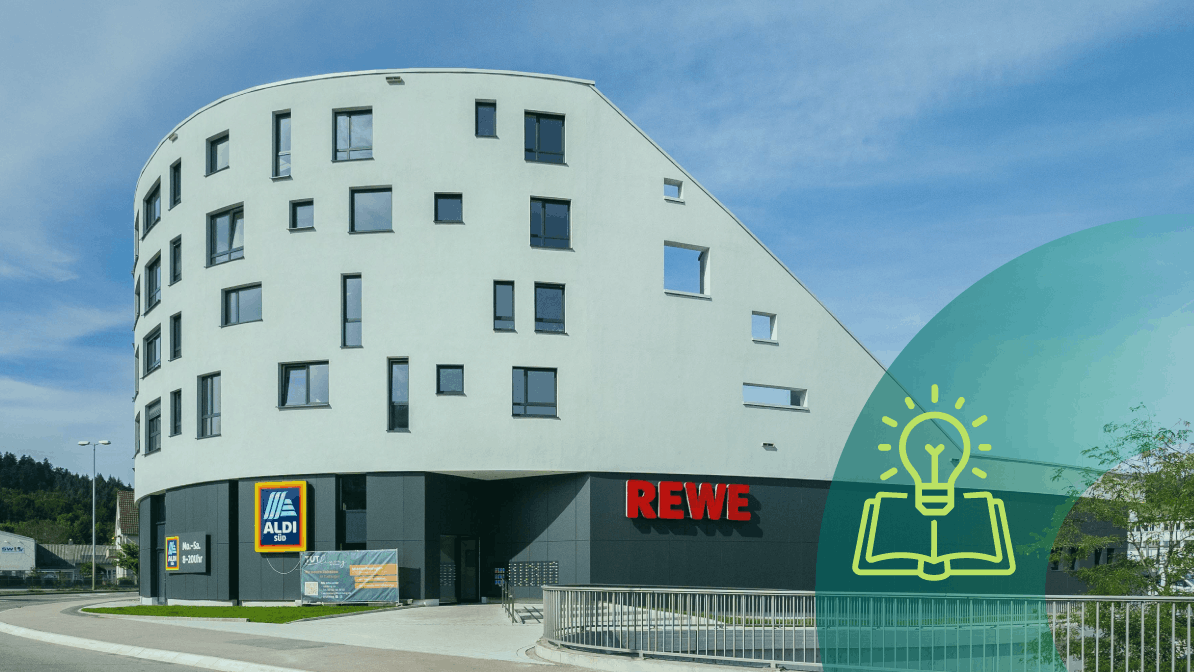
Real assets are tangible investments that generate income by providing essential services using physical assets . Unlike a company’s share price, which moves with sentiment and expectations, a physical asset – such as a supermarket property, energy supply, logistics, and digital infrastructure, generates income because people need to use it day to day.
For most retail investors, exposure to real assets once meant purchasing a rental property, a significant, illiquid and undiversified undertaking. Today, through regulated fund structures, the possibilities are broader including:
- Essential Real Estate: Grocery-anchored retail, last-mile logistics warehouses, healthcare facilities and urban mixed-use assets that underpin daily life.
- Critical Infrastructure: Renewable energy assets, digital and data infrastructure, and transport or utility-linked projects.
- Sustainable Resources & Food Systems: Agricultural land, controlled-environment agriculture and urban vertical farming solutions.
What unites these categories is that returns are typically driven by long-term leases, contracted revenues, or recurring user demand – creating income streams that tend to be less sensitive to short-term market volatility than equity dividends. Research suggests that allocating even a modest share of a diversified portfolio to real assets may help reduce overall volatility and provide some inflation protection, though outcomes are not guaranteed.
Why Real Assets are Relevant for Today’s Investment Portfolio’s
Several structural forces are reshaping the global economy and in ways that may increase demand for real assets over the medium to long-term.
- Stability in a Volatile Investment Landscape
Real asset performance is anchored in physical usage and long-term contracts rather than daily market sentiment. During periods of economic disruption – including the covid pandemic – essential assets such as food-anchored retail and logistics continued operating, supporting rental income when other sectors came under pressure. This resilience has been tested with Real Assets, whereas other sectors struggled - A hedge against inflation
Inflation erodes the real value of cash and fixed-income coupons. Many real asset contracts, however, include index-linked rent reviews or inflation-adjusted revenues, allowing income streams to better preserve purchasing power over time. For investors seeking sustainable income rather than short-term gains, this feature is increasingly attractive. - Investing in the Future
Real assets sit at the centre of several ongoing economic shifts that are expected to require sustained investment over the coming decades:
-
- The Energy Transition: Meeting EU climate goals requires large-scale investment in energy-efficient buildings, renewable energy generation, and decarbonised infrastructure.
- Energy Security: meeting EU and corporate priorities to generate energy locally with less resilience on energy sources from beyond Europe.
- Supply Chain Resilience: Companies are re-evaluating global supply chains, driving demand for modern European logistics hubs, urban distribution centres and localised food production.
Investing in real assets allows capital to be allocated directly to these foundational economic shifts, moving beyond passive exposure to stocks or bonds.
How Real Asset Strategies Create Value
Beyond simple, passive, ownership, real asset managers typically seek to enhance returns through active management. This can involve improving a property’s energy efficiency to reduce operating costs and attract tenants, installing on-site energy generation or charging infrastructure to create additional income streams, or using data and monitoring systems to improve operational efficiency.
These active management approaches can add value over time and are increasingly reflected in valuation practice under the RICS Valuation – Global Standards (Red Book) ESG-related updates, which become mandatory from 30 April 2026 and require valuers to evidence how material ESG factors (including sustainability-related CapEx and income risk) impact value. It is worth noting that these projects generally involve capital expenditure and not all enhancement projects deliver the anticipated returns. Investors should understand how a fund creates value – and what risks that involves – before committing capital.
How can a Retail Investor Access this Market?
Owning large-scale infrastructure or portfolios of essential property directly is rarely practical for individual investors. The EU has recognised this limited access and has sought to widen retail participation through several regulated fund structures, with ELTIFs representing one prominent example.
The ELTIF 2.0 reforms, which came into effect in 2024, were designed to make these funds more accessible to retail investors across the EU and EEA. These reforms broaden the range of eligible investments to include infrastructure, real estate, and long-term projects; expand the investor base; and simplify distribution across EU member states.3
For retail investors, this means a regulated pathway to professionally managed, diversified portfolios of real assets that were previously out of reach – within a framework of European regulatory oversight.4
It is important to note that ELTIFs are long-term investment vehicles. They are not designed for investors who may need access to their capital in the short term. Redemption terms vary by fund, and liquidity may be limited, particularly during periods of market stress. Investors should read the relevant fund documents carefully before investing.
What to Consider Before Investing
Before allocating to real assets, investors should consider:
- Strategic Clarity: does the fund have a transparent investment strategy anchored to identifiable long-term themes? Is the investment case clearly explained?
- Income Quality: Are revenue streams supported by long-term leases or contracted revenues? Are they inflation-linked? What is the track record of income delivery?
- Structure & Transparency: Understand fund fees, liquidity terms and governance frameworks. Real asset funds are typically long-term by nature; clarity on access, investment terms and exit conditions is essential.
A Note on Suitability
In a world marked by economic uncertainty and rapid structural change, anchoring part of a portfolio in the physical economy can offer a powerful counterbalance. Real assets can play a useful role in a diversified portfolio, offering the potential for stable income and some insulation from short-term market volatility. They are not, however, suitable for all investors. Their illiquid nature, long investment horizons, and exposure to property, infrastructure, and commodity markets all carry specific risks.
Investors considering real assets should assess whether the time horizon, liquidity constraints, and risk profile of a particular fund align with their own financial situation and objectives – and seek independent advice where appropriate.
Important Considerations
Before making any investment decision, please consider:
- The value of investments can go down as well as up
- Real asset funds structured as AIFs and ELTIFs are long-term investments and are not suitable for investors who require short-term liquidity
- Property values can fluctuate, particularly in response to interest rate changes
- Income from real assets, including rental income, is not guaranteed
- Inflation linkage in leases does not guarantee that real returns will be preserved
- Past performance is not a reliable guide to future results
- Distributions are not guaranteed and may vary
This article is for informational purposes only and does not constitute investment advice. Investors should consider their personal circumstances, read the relevant fund documents including the Key Information Document (KID), and where appropriate, seek independent financial advice before investing.
Greenman Investments is authorised and regulated as an Alternative Investment Fund Manager (AIFM).
Interested in learning more about real asset investing? Visit our website for educational resources and regular updates on our strategies.