Merry Christmas
from everyone in Greenman. Our offices will be closed from Wednesday, 24th December. And will reopen on
Friday, 2nd January.


Turning Data into Action in Grocery Real Estate
Last Updated on Oktober 20, 2026 by
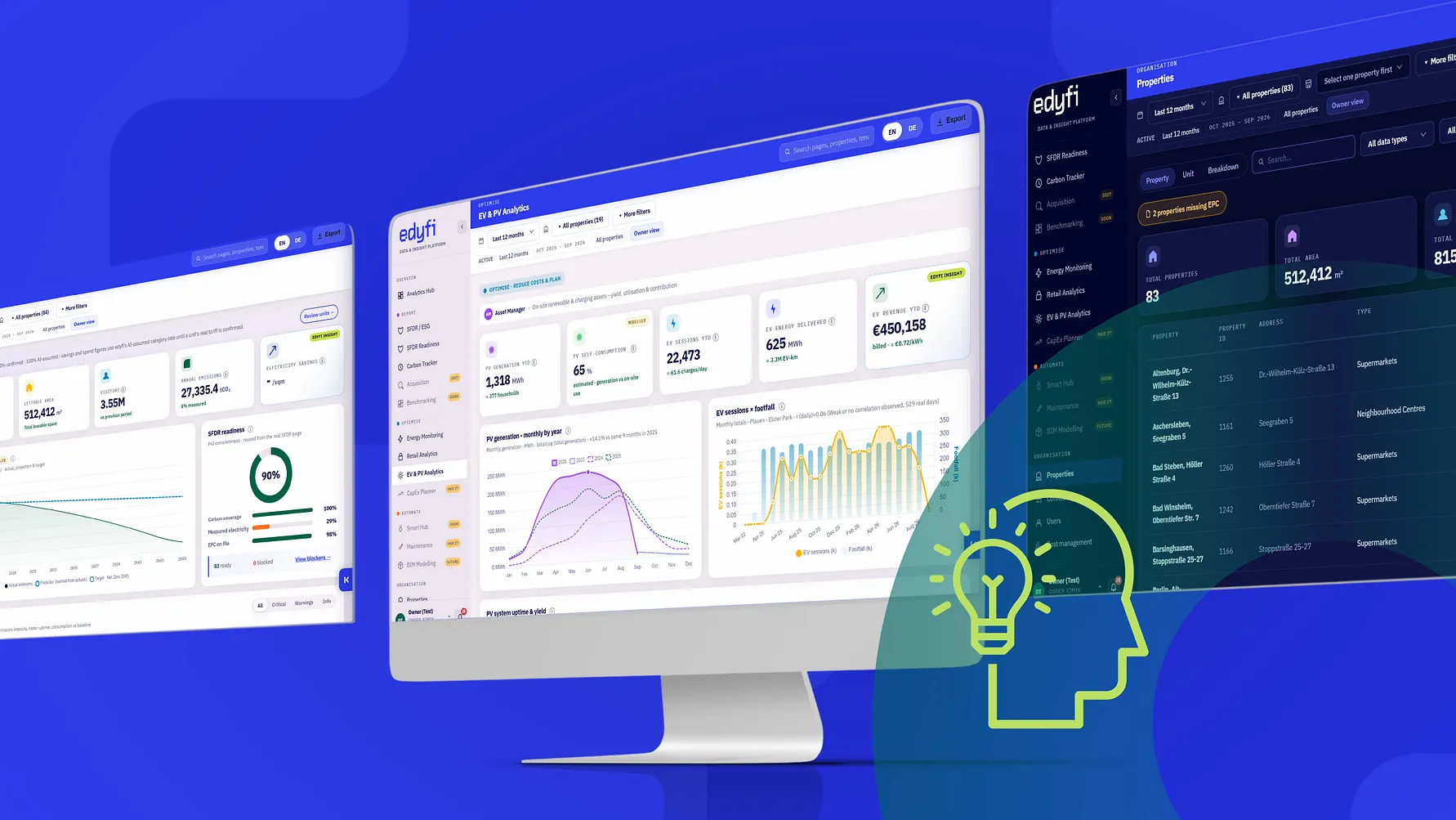
Emissions across Greenman OPEN’s grocery-anchored portfolio have fallen by c. 27% over four years, and the EV charging infrastructure Greenman Energy has installed on those sites has paid for itself, delivering 893,445 kWh across 32,108 charging sessions in the past 12 months. Both results sit at the centre of an editorial by Carmen Sitz, CEO of edyfi, and Johnnie Wilkinson, CEO of Greenman Group, published in the October 2026 issue of IMPACT, the Real Asset Media magazine.
The piece starts from a problem the whole sector recognises. For several years, decarbonisation has been largely about gathering information: collecting energy and emissions data, setting baselines and plotting a path to net zero. With the recast Energy Performance of Buildings Directive adding pressure on existing non-residential buildings, the harder question is what to do with it. In grocery, that is particularly demanding. Refrigeration, heating, lighting and long trading hours create high and continuous energy demand, and the picture is split. The owner knows the building and its systems, the occupier knows how the space is run and where energy is going, and neither has the full picture alone. Every handover to a separate provider for heating, solar or energy supply then adds time between spotting an issue and measuring the result.
The Greenman Group’s answer was to build those capabilities alongside its property and asset management business rather than buy them in asset by asset. edyfi brings the energy, emissions and building-performance data together, and Greenman Energy delivers the infrastructure and services. Across OPEN’s 83 grocery-anchored properties and 515 tenants, heat loss can lead to changes in controls or heating systems, and higher-than-expected consumption can inform decisions on lighting, heat pumps or solar. The results then feed back into the asset data, so the next assessment reflects what actually happened rather than earlier assumptions.
That is a long way from finished. OPEN’s target is a 50% emissions reduction by 2030 and net zero by 2045, so 27% reached so far is a little over half of the first milestone. The next step is to shorten the loop further. As more live data comes into edyfi, changes in consumption can be spotted sooner and the modelled path to net zero updated more often, and the same capabilities can be offered to owners and operators outside the Greenman portfolio who want them without building them from scratch. The next target in our sights is a 50% reduction in emissions by 2030.
Read the full article in Real Assets Impact magazine.
Capital at risk. Long-term Investment.
Important Note
This update is for information purposes only. Shareholders in any Greenman fund are not required to act upon any of the information contained in this update.
This update may include forecasts, forward-looking statements, and estimates. There is a significant risk that targets and milestones mentioned in this update may not be met or may not be met in the expected timeline, and the performance of Greenman funds may be affected if these targets are not met.
This update also may include current and historic information. Historic data and therefore past performance is not a good predictor of future performance.
Nothing in this update should be considered as investment advice or as a recommendation to invest.
Further Information
If you would like further information, please feel free to contact our investor’s team at [email protected]